21 SEPTEMBER 2026



“Designer jewellery” is one of the most common phrases typed into Google by shoppers who aren’t entirely sure what they’re looking for — and in Singapore, it usually returns a mix of mass-manufactured pieces stamped with a brand name and genuinely bespoke jewellery singapore studios doing very different work. The label promises something exclusive. In practice, “designer” is a marketing term with no fixed legal meaning, and knowing the difference is the first step to actually getting what you’re paying for.
What “Designer” Legally Means (And Doesn’t)
The Federal Trade Commission’s Jewellery Guides — the closest thing the jewellery trade has to an internationally referenced advertising standard — regulate specific claims like diamond weight, precious metal content and gemstone treatment disclosures, but “designer” itself is not a defined or regulated term. A brand can call a piece “designer” whether it was drawn by an in-house team and produced by hand, or licensed from a name and mass-manufactured overseas. That gap is exactly why the label alone tells a shopper very little about how a piece was actually made.
Why This Confusion Persists in Singapore Specifically
Singapore’s jewellery market includes everything from international licensed brands to small independent studios, often sitting on the same shopping strip or within the same mall directory. That density makes the “designer” label especially easy to lean on, since a shopper comparing several storefronts in one afternoon rarely has time to ask each one how their pieces are actually produced. The result is that price alone often becomes the deciding factor, when the more useful comparison is process: is this piece one of a production run, or one of one.
Designer vs. Artisan vs. Bespoke: Three Different Promises
These three words get used almost interchangeably in marketing, but they describe genuinely different things. “Designer” typically signals a named brand or aesthetic applied across a production run — the design is fixed, and quantity is the point. “Artisan jewellery” usually means a piece made by hand or by a small studio using traditional techniques, though the same design may still be repeated for multiple customers. “Bespoke” is the narrowest promise of the three: a piece designed from a blank page, for one person, crafted as one of one rather than repeated at all. Knowing which promise a jeweller is actually making — not just which word they use — is what determines whether you’re buying something genuinely personal.
Why the Distinction Actually Matters When You’re Buying
Consumer research into jewellery customisation has tracked a real shift in preference: a majority of younger buyers surveyed now favour custom pieces over ready-made designs, with engagement and wedding jewellery representing a significant share of everything customised, according to industry analysis compiled by Market Growth Reports. The appeal is straightforward — a bespoke piece is built around a specific story rather than a template the buyer has to adapt to. But that shift has also made “designer,” “custom” and “bespoke” increasingly interchangeable in marketing copy, even when the underlying process is nothing alike.
What “Bespoke Beats Off-the-Shelf” Actually Looks Like at Twomorrow
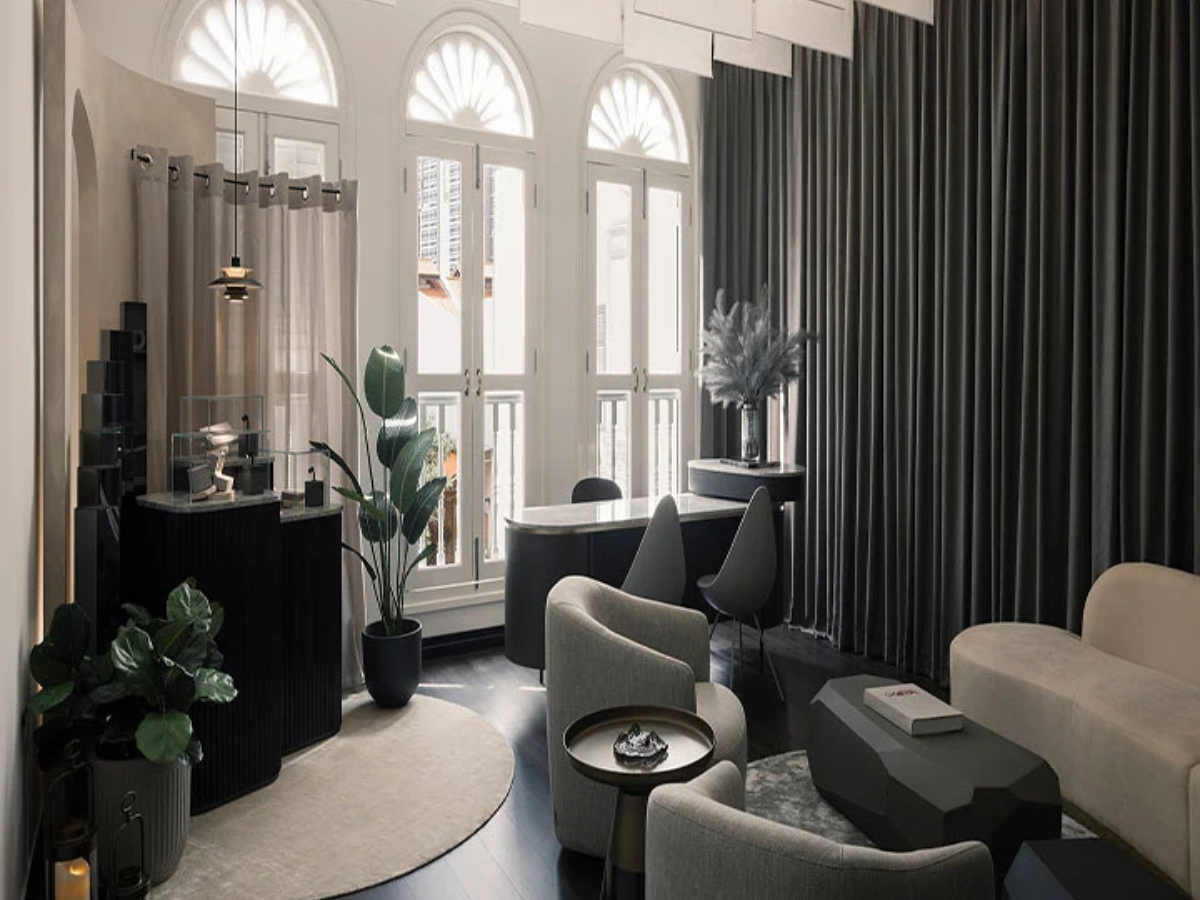
At Twomorrow, every piece that comes through our Create Your Twomorrow process is crafted as one of one — not a repeated house design, and not a licensed template produced at scale. A private consultation at our Telok Ayer atelier establishes budget, stone preference and design direction; from there, our team sketches and renders the piece before it’s crafted, so nothing is committed to metal until the client has seen and approved the design. It’s a slower process than picking from a display case, and that’s deliberate — the piece is meant to belong to one person, not to a production run.
The Economics Behind a “Designer” Markup
Part of what a designer label sells is name recognition rather than materials or craftsmanship, which is worth factoring into how you compare two pieces at a similar price point. A licensed “designer” ring produced in volume overseas can carry a premium for the brand name alone, while a bespoke piece made locally often puts a larger share of the price into the actual stone, metal weight and the hours spent on the design itself. Neither approach is wrong — some buyers are specifically after brand recognition — but it’s worth knowing which one you’re paying for before comparing two quotes that look similar on paper.
A Practical Way to Tell the Difference When Shopping
Three questions tend to cut through the marketing language quickly. First, ask whether the exact design is sold to other customers, or made once for you — that single answer separates artisan-repeated work from genuinely bespoke work. Second, ask who physically crafts the piece and where, since “designer” branding says nothing about production location or process. Third, for any gemstone involved, ask what documentation or certification accompanies it; a jeweller doing genuine bespoke work should be able to speak to sourcing and authenticity without hesitation, whether the stone in question is a classic white diamond or something more unconventional, like our salt-and-pepper diamond pieces. The same logic applies to bespoke wedding bands, covered in our related guide [LINK TO: Post 4 — Bespoke Wedding Bands in Singapore: Designing Rings That Match, Not Mirror], where “matching” and “mass-produced” often get confused in the same way.
What This Means If You’re Comparing Quotes in Singapore
When two quotes from different jewellers look similar on the surface, the label attached to each — designer, artisan, bespoke — is a reasonable starting point for a conversation, but it shouldn’t be the deciding factor on its own. Ask each jeweller to walk through where the price actually goes: how much reflects the stone, how much reflects the metal, and how much reflects design time or brand licensing. A jeweller genuinely doing bespoke work will usually be able to itemise this without difficulty, since there’s no production run or licensing fee to obscure the breakdown.
Frequently Asked Questions
Is “designer jewellery” the same as bespoke jewellery?
Not necessarily. “Designer” usually refers to a named brand or aesthetic applied across multiple pieces, while bespoke means a design made once, for one person.
Is artisan jewellery always one of one?
Not always. Artisan jewellery is typically handmade using traditional techniques, but the same design can still be crafted for more than one customer, unlike a fully bespoke piece.
Is bespoke jewellery more expensive than designer jewellery?
Not automatically. Pricing depends far more on materials, stone choice and design complexity than on which of these labels is used to describe the piece.
How do I know if a Singapore jeweller genuinely does bespoke work?
Ask directly whether your design will be repeated for other customers, who crafts the piece, and what documentation accompanies any gemstones used.
Can I combine a bespoke design with a gemstone I already own?
In many cases, yes — a private consultation is the right place to discuss whether an existing stone can be reset into a new, bespoke design.
Start With a Conversation, Not a Catalogue
If you’d rather design something that’s genuinely yours than choose from what’s already made, message us on WhatsApp to book a private consultation at our Telok Ayer atelier.
References
- Federal Trade Commission. (2021). Jewelry Guides. FTC.gov. https://www.ftc.gov/news-events/topics/tools-consumers/jewelry-guides
- Market Growth Reports. (2026). Jewelry Customization Market. MarketGrowthReports.com. https://www.marketgrowthreports.com/market-reports/jewelry-customization-market-112542
