26 NOVEMBER 2026



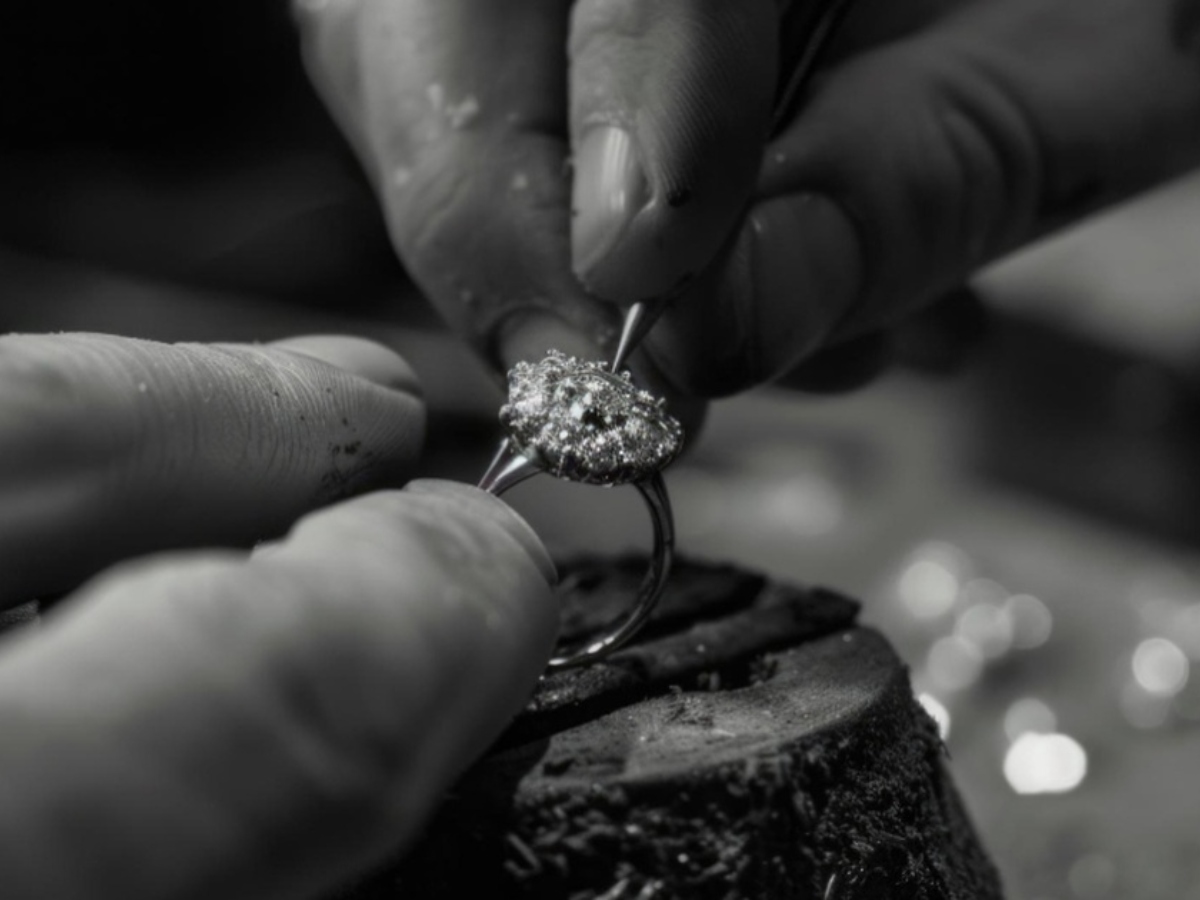
Fine jewellery sg shoppers see the phrase everywhere, from mall counters to independent studios, yet it is rarely explained. Two pieces can carry the same label and be made in completely different ways. Understanding what fine jewellery actually means, and how crafted pieces differ from mass-produced ones, makes it far easier to judge quality, compare prices and choose something you will wear for years. Here is what we look for, and how it shapes the way we work at our Telok Ayer Atelier.
What Does “Fine Jewellery” Actually Mean?
Fine jewellery usually refers to pieces made from precious metals, such as gold or platinum, set with genuine gemstones or diamonds. It sits apart from fashion or costume jewellery, which typically uses plated base metals and simulated stones. The term describes materials first, but materials alone do not tell you how well a piece was made.
Many shoppers searching for luxury jewellery singapore are really asking the same question: is this piece worth what it costs? The answer depends on three things working together, namely the quality of the materials, the way the piece is designed and the care taken in making it.
Why the Label Alone Is Not Enough
Jewellery marketing uses many overlapping words, including fine, designer, artisan and bespoke. Some describe materials, others describe a brand or a process, and they are often used interchangeably. In the United States, the Federal Trade Commission’s Jewelry Guides set out how sellers should describe precious metals, diamonds and gemstones so that buyers are not misled, which shows how much the wording around jewellery matters. The guides focus on specific claims about materials, so a broad label still tells you little about the craft behind a piece.
The same confusion affects the word designer. If you are comparing designer jewellery singapore What “Designer Jewellery” Actually Means in Singapore — And Why Bespoke Beats Off-the-Shelf options, our guide explains how designer, artisan and bespoke describe very different promises.
How to Judge Quality Beyond the Label
1. The Stone
For diamonds, the starting point is the 4Cs. The Gemological Institute of America (GIA) created the 4Cs of colour, clarity, cut and carat weight as the universal method for assessing diamond quality, giving buyers a shared language to compare stones. For unconventional diamonds, character matters as much as grade. A salt and pepper diamond ring is valued for the pattern of its inclusions rather than flawless clarity, so the right stone is the one whose markings you love.
2. The Metal
Check the metal and its purity. Solid gold and platinum hold their finish and can be resized, polished and repaired for decades. Gold is usually described by karat, with 18k containing a higher proportion of pure gold than 14k, while platinum is naturally white and dense, which makes it feel substantial on the hand. A good jeweller will tell you exactly what a piece is made of and how it should be cared for.
3. The Setting
Look closely at how the stone is held. Prongs should be even and secure, bezels should sit flush, and the underside of the setting should be as cleanly finished as the top. The setting is where rushed production usually shows first. For heavily included stones such as salt and pepper diamonds, a protective setting like a bezel helps guard the edges against everyday knocks.
4. The Finish
Run a finger along the inside of a ring band. In well-made fine jewellery, inner surfaces are smooth and comfortable, edges are softened and there are no rough solder marks. These small details are what make a piece pleasant to wear every day. Ask to see a piece under good light and from every angle before you buy.
What Sets Crafted Pieces Apart
Crafted pieces are designed and made by skilled people who make decisions at every step, from choosing the stone to deciding when a surface is truly finished. Mass-produced pieces rely on repetition, with one design cast in large numbers so every piece is identical. Both use precious materials, but the level of individual attention is very different. We explore this idea further in our guide to artisanal jewellery and the way small-batch making shapes each piece.
At Twomorrow, we take a stone-led approach. Many of our pieces are designed around a specific salt and pepper or champagne diamond, so the setting responds to that stone’s colour, outline and inner character. Our Unbounded collection was created as one of one pieces, each built around its own stone rather than repeated from a template.
Where One of One Pieces Fit
Not every piece of fine jewellery needs to be one of one, and there is real value in well-made collection pieces. A one of one piece, however, offers something a production run cannot: the certainty that no one else will wear the same design. For milestones such as engagements, anniversaries or a personal achievement, that individuality is often the point. It also means the design can respond to how you actually live, whether that is a low setting for daily wear or a stone chosen for its colour.
If you would like a piece made entirely around you, our bespoke jewellery singapore service begins with a consultation at our Atelier. You view stones in person, we develop the design through hand sketches and CAD renders, and the piece is crafted once the design is approved. You can also browse our fine jewellery sg collections to see finished pieces before deciding.
How to Shop for Fine Jewellery With Confidence
- Ask what it is made of. Confirm the metal, its purity and the type of stone.
- Ask who makes it. Find out whether the design is repeated or made in small numbers.
- See stones in person. Colour and inclusions look different in daylight and indoor light.
- Check the finish. Look at inner surfaces, settings and the back of the piece.
- Ask about aftercare. Resizing, cleaning and checking settings should be straightforward.
Is Crafted Fine Jewellery Worth It?
Crafted fine jewellery is not automatically more expensive than mass-produced pieces made with similar materials. Price depends on the stone, the metal, the design and the work involved. What you gain is a piece made with attention, a clear understanding of what you are buying and, for bespoke work, the chance to shape the design yourself.
Frequently Asked Questions
What is the difference between fine jewellery and fashion jewellery?
Fine jewellery uses precious metals and genuine gemstones or diamonds, while fashion jewellery usually uses plated base metals and simulated stones.
Is designer jewellery the same as fine jewellery?
Not necessarily. Designer describes a brand or aesthetic, while fine describes the materials. A piece can be one without the other.
How do I check the quality of a diamond?
Start with the 4Cs of colour, clarity, cut and carat weight. For unconventional diamonds, also consider the character and pattern of the stone.
Can fine jewellery be resized or repaired?
In most cases, yes. Pieces made from solid gold or platinum can usually be resized, polished and repaired over time.
Can I see Twomorrow’s pieces in person?
Yes. Our Atelier at 134B Telok Ayer Street is open by appointment, 11am to 8pm, except Wednesday and Sunday.
Discover Jewellery Made With Intention
If you are looking for fine jewellery with real character, we would love to show you what that looks like in person. Message us on WhatsApp at +65 8822 7418 to book a private appointment at our Telok Ayer Atelier, where every piece begins with a stone and a conversation.
References
Federal Trade Commission. (n.d.). Jewelry Guides. FTC.gov. https://www.ftc.gov/news-events/topics/tools-consumers/jewelry-guides
Gemological Institute of America. (n.d.). 4Cs of Diamond Quality. GIA 4Cs. https://4cs.gia.edu/en-us/4cs-diamond-quality/